Residential Bipolar Disorder and Substance Abuse Treatment in Idaho
From the years of 2001 to 2003, about 2.8% adults in the United States were reported to have some form of bipolar disorder. If left untreated, complications to health (physical and mental), relationships, and other important aspects of life can be immense. People with bipolar disorder experience the highest rate of serious personal impairment of all mood disorders, with just over 82% reporting serious impairment in their lives.
Specialized treatment centers play a crucial role in providing evidence-based care for bipolar disorder, offering structured programs and psychiatric expertise to support recovery. People with mental health conditions such as bipolar disorder are also immensely susceptible to developing a substance use disorder (SUD). Vice versa, substance abuse can also lead to the aggravation of mental health symptoms.
At Eagle Creek Ranch Recovery in Nampa, Idaho, you’re not alone in your struggles. Our rehab facility specializes in providing dual diagnosis treatment for people recovering from addiction alongside mental health conditions. The goal is to learn how to support recovery from addiction as well as how to manage bipolar disorder in a healthy way. Residential bipolar treatment can provide many helpful tools and coping mechanisms that you can take into your life as a whole.
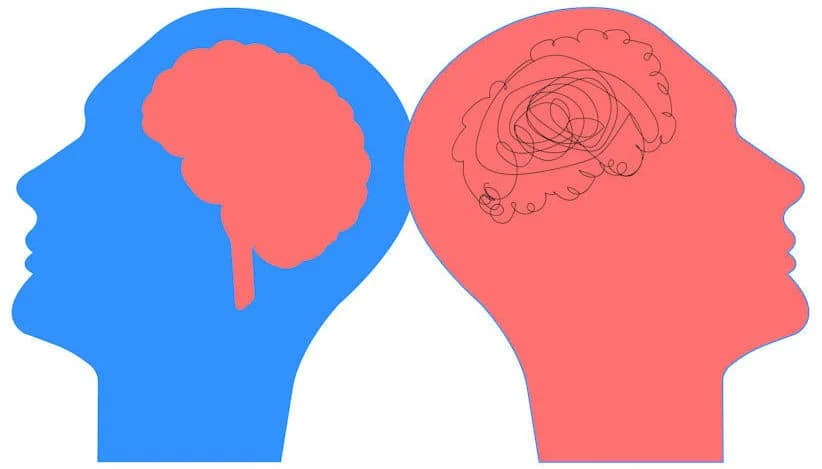
Bipolar disorder, formerly known as manic-depressive disorder, is a mental illness that causes unpredictable changes in a person’s mood, energy, activity levels, concentration, and ability to carry out day-to-day tasks. Symptoms often present in late adolescence into a person’s early 20s.
People diagnosed with bipolar disorder experience intense emotional states that occur during distinct periods. The mood swings experienced by people with bipolar disorder are usually accompanied by extreme behavior changes, although every individual case is different.
There are three types of bipolar disorder, each with distinct characteristics:
- Bipolar I: This “classic” form of bipolar disorder is characterized by experiencing periods of mania and depression, sometimes lasting for days or weeks.
- Bipolar II: A person with this form of bipolar disorder will more often experience the depressive symptoms of bipolar disorder, sometimes never experiencing mania. They may experience a milder form known as hypomania.
- Cyclothymic disorder: The person may experience mania or depressive symptoms, but they are not as severe as those of someone with a conventional bipolar disorder.
Contact Eagle Creek Ranch Recovery
Today!
Why Wait? Find The Help You Need By Reaching Out To Us Today! Our Admissions Team Is Standing By.
Signs and Symptoms of a Bipolar Disorder
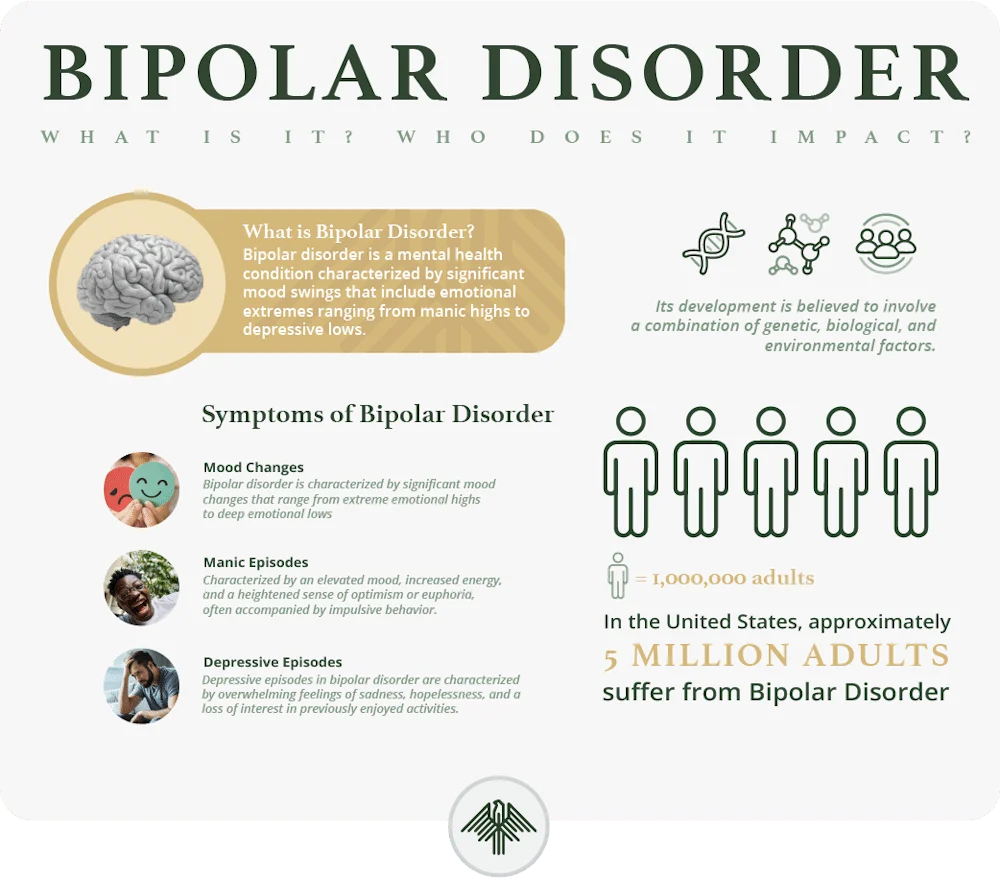
Bipolar disorder encompasses a huge array of emotional and behavioral disorders, with bipolar symptoms varying widely in severity and presentation. It is common for individuals with bipolar disorder to experience co-occurring disorders (such as substance abuse), which can complicate both the diagnosis and treatment of bipolar disorder. This emphasizes the importance of a full evaluation by a medical professional in securing an accurate diagnosis.
Mood episodes associated with bipolar disorders are typically classified into four types:
The manic type of bipolar disorder typically manifests feelings of heightened energy, creativity, and euphoria. People experiencing a manic episode may also feel all-powerful, invincible, or destined for greatness.
Symptoms of mania include:
- Feeling an unusual emotional “high”
- Unreasonably optimistic
- Extremely irritable
- Grandiose beliefs about one’s abilities
- Feeling extremely energetic despite getting little sleep
- Talking so rapidly that they sound incoherent
- Uncontrolled racing thoughts
- Jumping quickly from one idea to the next
- Easily distracted
- Unable to concentrate or focus
- Impaired judgment
- Severe impulsiveness
- Reckless behavior
Mania, however, can spiral out of control. People having a manic episode can behave recklessly, doing things like gambling away all their savings, engaging in inappropriate sexual activity, or engaging in ill-advised business investments.
It is not uncommon for people in a manic episode to appear to be on a hair-trigger, easily becoming angry, irritable, and aggressive. People in a manic state are known to pick fights, lash out at others despite being unprovoked, and go off on anyone who criticizes their behavior. There are even cases where the delusions affect their senses, with the person experiencing a manic episode claiming they hear voices telling them to do things.
Hypomania is similar to mania, but to a lesser degree. In a hypomanic state, people will likely feel euphoric, energetic, and productive. These people could carry on with their day-to-day life without losing touch with reality.
To people who do not know that the person is having a hypomanic episode, the person would appear to simply be having a good day or merely be in an unusually good mood. Hypomania, however, can impair a person’s judgment enough to influence the person to make bad decisions. Hypomania can be particularly challenging to identify in young adults, as their symptoms may be mistaken for normal mood fluctuations. Hypomania can escalate to full-blown mania or be followed by a major depressive episode.
Bipolar-induced depression often co-occurs with other mental illnesses (such as eating disorders), making comprehensive evaluation and integrated treatment essential. This can cause major problems in work and social functioning, not to mention getting to the point where it becomes an obvious danger to the person’s safety and well-being.
Symptoms of bipolar-induced depressive episodes include:
- Feeling hopeless, sad, or empty
- Irritability
- Inability to experience pleasure
- Chronic fatigue
- Physical and mental sluggishness
- Significant appetite or weight changes
- Disruption of sleeping patterns
- Inability to concentrate
- Impaired memory
- Unwarranted feelings of worthlessness or guilt
- Thoughts of death or suicide
Individuals with bipolar depression may also struggle with self-harm behaviors, which can further increase their risk of suicide and highlight the need for specialized support.
As the name suggests, some people experience symptoms of both mania (or hypomania) and depression. Mixed episodes can be very confusing, as they combine feelings of being sad and hopeless while feeling anxious, pressured, and energetic.
Symptoms of a mixed episode can include:
- Depression combined with agitation
- Severe irritability
- Chronic feelings of anxiety
- Insomnia
- Inability to concentrate
- Racing thoughts
Mixed episodes can present a critical danger, because the combination of high energy and low mood can induce a severely confused state that increases the likelihood of suicide. Developing distress tolerance and healthy coping mechanisms to cope with mixed episodes is essential. Building interpersonal effectiveness skills can help manage relationships and set boundaries during these incidents, supporting lasting wellness in the recovery process.
The Relationship Between Bipolar Disorder and Substance Abuse
Bipolar disorder and substance abuse commonly co-occur. In general, many people who have an addiction also have a mental health condition. People with bipolar disorder who abuse drugs or alcohol tend to have an earlier onset of bipolar disorder symptoms and a worse course of illness than those who do not. They are more likely to have irritable and dysphoric mood states, increased treatment resistance, and the need for hospitalization. Many people with bipolar disorder use substances to alleviate symptoms of their condition or feel a measure of control over their mood.
Like substance abuse, bipolar disorder can be attributed to genetics and chemical imbalances in the brain. A traumatic environment can also increase the risk of bipolar disorder. It can result in financial and legal difficulties, addiction, relationship problems, and suicide. Treating bipolar disorder is frequently the difference between life and death.
For individuals facing both bipolar disorder and substance abuse, residential treatment helps provide a structured, stable environment where they can focus on recovery. Medically-assisted detox can help with alleviating symptoms of bipolar disorder that may emerge while the body is under physical stress. A comprehensive treatment program can offer support through specialized group sessions and integrated therapies, helping individuals manage both conditions effectively.
Treatments for Bipolar Disorder and Substance Abuse

Medical specialists typically recommend multiple strategies for bipolar disorder treatment, common to many mental health conditions. Like many mood disorders, there is no outright cure for bipolar disorder. But it can be managed, with mood episodes not dominating daily living or sabotaging a person’s efforts to nurture positive mental health.
A comprehensive treatment plan for bipolar disorder and substance abuse may include:
Medication (often in the form of mood stabilizers) is the cornerstone of bipolar disorder treatment. The associated mood swings are often addressed with prescription medications. The goal is to regulate mood swings to a level where the person is better able to manage their behavior despite the sudden changes in their mood. There are several different options for medication to manage bipolar disorder, and each individual case should be treated differently.
Our treatment programs incorporate evidence-based therapy to provide comprehensive care for both addiction and bipolar disorder. Talk therapy is a core component of our therapeutic process, helping individuals address their unique challenges. Dialectical behavior therapy (DBT) can also be effective for individuals with bipolar disorder, due to its focus on emotion regulation and tolerating feelings of distress. Family therapy can be invaluable, as it can help family members learn about bipolar disorder from an accurate source and strategize how they can support the person with bipolar disorder in their lives.
Much like a person in recovery, certain lifestyle regulations can help significantly in keeping mood fluctuations to a minimum (or at least make them more manageable). Certain lifestyle choices, such as maintaining a regular sleep schedule, avoiding alcohol and drugs, sticking to a healthy diet, and engaging in consistent exercise, can help minimize the stress that a person with bipolar disorder might experience daily. Developing healthy ways to cope with stress and mood fluctuations (such as practicing mindfulness or using relaxation techniques) can further support well-being and recovery.
Residential bipolar disorder treatment can offer the opportunity to focus on learning how to live healthfully with bipolar disorder, such as learning healthy coping skills, developing a multifaceted treatment plan, and gaining support from others also undergoing bipolar treatment.
Bipolar Disorder Can be Managed. Get Help at Eagle Creek Ranch Recovery

The difficulty that comes with certain conditions often makes people think that there is no way to manage the symptoms or even lead a normal life. We here at Eagle Creek Ranch Recovery in Nampa, ID, have helped countless people with their conditions, allowing them to lead better, fuller lives. We could help you with yours as well. Contact us today.

Clinical Director
Kendall Maloof is the clinical director at Eagle Creek Ranch Recovery. She is a licensed marriage and family therapist and has held multiple leadership roles before settling here at Eagle Creek Ranch Recovery. Kendall received her master’s degree in marriage and family therapy from the Chicago School of Professional Psychology in 2016. Her career in mental and behavioral health began in 2014 when she took up internships in both the nonprofit and for profit sectors. She interned at multiple reputable companies, such as The Living Success Center and 449 Recovery in California.
In 2019, Kendall became the clinical director of Sunsets Recovery for Woman, a dual diagnosis program in southern California. Kendall is a natural leader. She has an incredible ability to problem solve and stay calm in any situation. Kendall never fails to show up when she is needed, and her calm demeanor makes her team and clients feel at ease. Eagle Creek Ranch Recovery is proud to have Kendall as our clinical director.